
Cover Story
A valuable Rembrandt self-portrait heads to auction
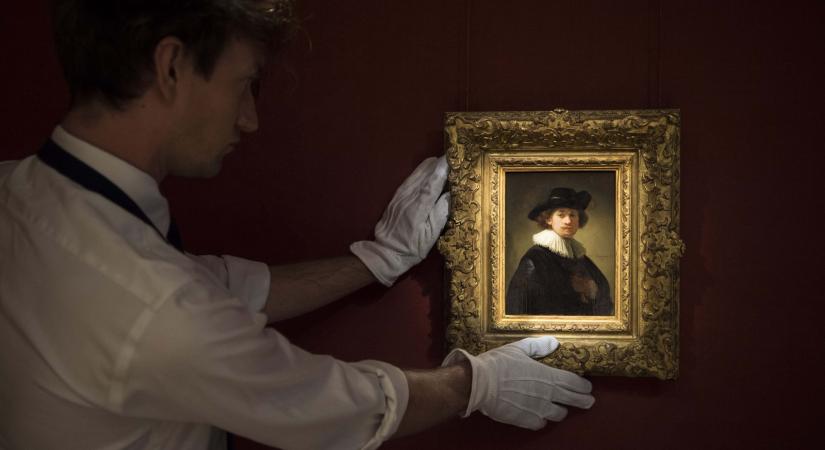
The rare painting of the Dutch master will be sold by Sotheby’s in London on 28 July with an estimate crossing Rs 100 crore
BySiddhi Jain
June 22, 2020 (IANSlife) Rembrandt has been one of the most recognisable face in art. From sketches of an ambitious and self-confident youth of 22, to detailed and sobering self-depictions of a careworn and prematurely aged old man of 63, the Dutch-born artist recorded his own physiognomy in some 80 paintings, etchings and drawings, documenting his enduring captivation with his own image throughout almost the entire span of his career.
Almost all of Rembrandt’s painted self-portraits are by now in major museum collections, and only three remain in private hands. One of these, discovered and sold at Sotheby’s in London in 2003, is in the Leiden collection in New York, while another is on long-term loan to the National Gallery of Scotland.
The third – the earliest in date of the three, and in some ways the most revealing – will be offered with an estimate of £12-16 million (Rs 102-136 crore approx) at Sotheby’s London on July 28.
Of intimate proportions and embodying Rembrandt’s unique mastery of self-examination, self-portrait, wearing a ruff and black hat, will star in their evening sale.
The painting can be dated to a narrow window towards the end of 1632, thanks to the fact that it is signed with a form of the artist’s signature that he only very briefly employed, and also because dendrochronological analysis shows that it is painted on a panel cut from the same Baltic oak tree as another picture from that precise period, Sotheby's said.
Rembrandt’s unceasing journey of self-depiction forms a central part of his artistic output, but seems to have served a variety of different purposes, at different stages in his career. When starting out as a young artist in Leiden, Rembrandt tended to use his own face when exploring depictions of moods and facial expressions, whereas in the later 1630s he typically showed himself in elaborate fancy dress, and in subsequent decades concentrated increasingly on restrained and psychologically penetrating images.
Self-portrait, wearing a ruff and black hat, painted just after the 26-year-old Rembrandt set himself up in Amsterdam, falls intriguingly somewhere between the first and the second of these groups of works; here, the artist shows himself clad in black, with a white ruff and a felt hat, the crown encircled by with a hatband decorated with gold – a rather formal type of outfit that would typically have been worn by the sitters he depicted, not by Rembrandt himself.
(This article is website exclusive and cannot be reproduced without the permission of IANSlife)
Siddhi Jain can be contacted at siddhi.j@ians.in